JAR CARE · NOVEMBER 3, 2026
How do you pour
honey without
the sticky trail?
A clean, dry tool and one patient turn over the jar can keep honey on the food instead of the counter.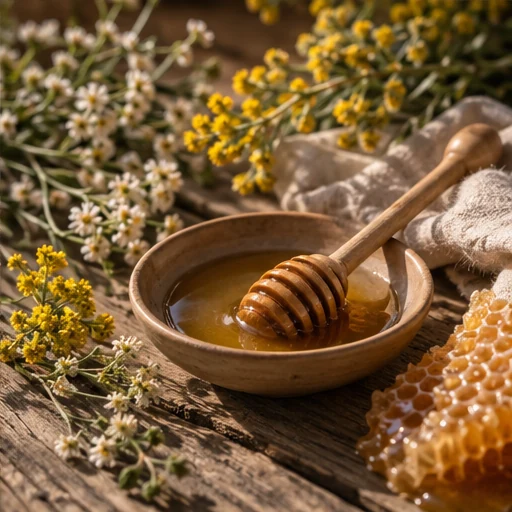
Honey stretches into a thread because it flows more slowly than water. That beautiful texture is also why a rushed spoon can draw a sticky line from jar to toast. The solution is not a special gadget. It is a small serving routine that keeps the utensil, rim, lid, and counter under control.
01 · THE QUICK ANSWER
Pause over the jar, rotate once, and move only after the thread breaks.
Begin with a clean, completely dry spoon or honey dipper. Collect only the amount you need. Hold the utensil over the center of the jar and wait for the main stream to slow. Then turn the utensil once so the last thread wraps around it instead of following you across the counter.
Move the utensil over the food in one direct path. Keep a small saucer nearby if you expect to serve more than one spoonful. The saucer gives the used utensil a clean landing place and prevents it from touching the counter, tablecloth, or jar lid.
A folded paper towel can catch a drip, but it should not touch the honey inside the jar. The goal is to control the exterior without introducing fibers, water, crumbs, butter, or other food into the honey.
02 · CHOOSE THE TOOL
A spoon is practical; a dipper is useful when you serve slowly.
A teaspoon works well for tea, yogurt, oatmeal, and small recipe amounts. Its bowl makes the portion easy to see, and the edge can be scraped gently against another utensil when a recipe needs most of the honey released. Use a larger spoon only when the opening is wide enough to avoid rubbing honey onto the threads and rim.
A grooved honey dipper holds honey between its ridges while it turns. Rotate it slowly above the jar, carry it horizontally, then stop turning when you are ready to drizzle. It is especially convenient for a cheese board, biscuits, or a shared breakfast table where a controlled ribbon looks inviting.
Do not store a serving dipper inside a retail jar unless the container was specifically designed for that purpose. Close the honey with its proper lid. Wash the dipper separately and let it dry completely before it touches the jar again.
03 · CONTROL THE STREAM
Keep the distance short and let gravity do less work.
Set the food close to the jar before opening it. A long reach creates a long honey thread, so place the cup, toast, mixing bowl, or serving plate within a few inches. Keep the jar upright and scoop from the center rather than dragging the utensil across the rim.
For a drizzle, begin close to the food. Raise the utensil only when you want a finer line, and lower it again before finishing. At the end, turn the spoon or dipper and pause. Moving sideways before the stream has slowed is what creates the familiar sticky bridge between the plate and jar.
Honey flows faster when it is warm and more slowly when it is cool or crystallized. Do not overheat the whole jar merely to make serving easier. If the texture has become firm and you prefer it more fluid, use the patient method in our guide to softening crystallized honey gently.
04 · MEASURE FOR RECIPES
Prepare the bowl first so the measured honey has somewhere to go.
Read the recipe, set out every ingredient, and position the mixing bowl before opening the jar. Measure honey last among the ingredients that share the same spoon or cup. That reduces the time a honey-coated utensil waits on the counter and makes it easier to move directly into the mixture.
For a spoon measure, fill the spoon over the open jar so an accidental overflow returns to the same honey rather than landing on the work surface. Move the filled spoon directly to the bowl and let it drain. A narrow silicone spatula or a second clean utensil can help release the remaining honey without putting recipe ingredients back into the jar.
When precision matters, follow the tested recipe exactly. Honey adds liquid as well as sweetness, so replacing another sweetener is not always a one-for-one change. Our cooking guide to replacing sugar with honey explains why baking substitutions need more care than stirring a spoonful into tea.
05 · PROTECT THE RIM AND LID
A clean closure prevents the next sticky problem.
Before replacing the lid, look at the glass threads and outside rim. If honey is present, wipe the exterior with a clean cloth that is only slightly damp, then dry the area. Do not pour water into the jar, rinse the rim over the open honey, or return a wet utensil to the container.
Close the lid firmly without forcing it. Honey trapped between the lid and glass can make the closure harder to open and can spread to cabinets, hands, and gift packaging. Cleaning a small drip now is easier than cleaning a ring after it has collected dust or crumbs.
Store the jar upright in a cool, dry cupboard away from a sunny Las Vegas window, a hot appliance, or steam. For the complete routine, see how to store raw honey in Las Vegas and how to care for an opened jar.
06 · CLEAN, DRY, AND ENJOY
Warm water handles the tool; patience protects the jar.
Place the used spoon or dipper on its saucer until the meal is finished, then rinse it under warm water and wash it with ordinary dish soap. Honey dissolves readily in water, so harsh scraping is usually unnecessary. Dry the utensil completely before its next use.
If a drip reaches the counter, wipe it with a warm damp cloth and then dry the surface. If the jar itself needs a fresh start after the last spoonful, follow our guide to cleaning and reusing a honey jar.
Ready to practice with a regional harvest? Compare the honey collection, explore gift and discovery sets, review our sourcing standards and bee stewardship notes, or browse the Honey Guide. Desert Honey LV distributes honey sourced from regional independent beekeepers; we do not represent it as produced in Las Vegas.
Local pickup is arranged near Rhodes Ranch in Southwest Las Vegas. The exact public meeting point is shared after confirmation. Contact us to reserve a jar, and ask for help choosing a one-pound or three-pound size for your table.
#DesertHoneyLV · #LasVegasHoney · #HoneyTips · #JarCare · #RegionalHoney · #RhodesRanch · #SouthwestLasVegas