LAS VEGAS HONEY CARE · OCTOBER 3, 2026
How should you
store raw honey
in desert heat?
A sealed jar, a steady cupboard and a clean spoon do most of the work.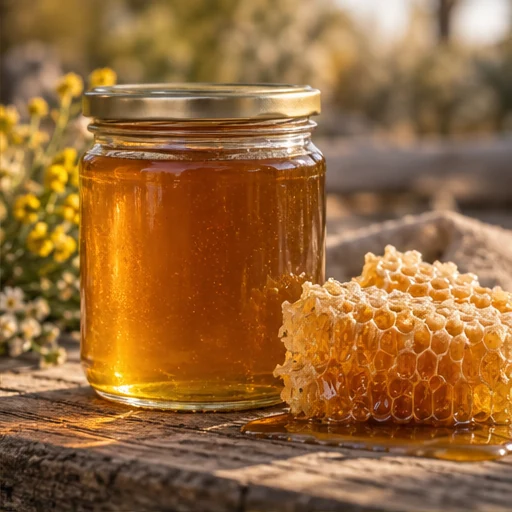
Las Vegas kitchens can become surprisingly warm, especially near a sunny window or active stove. Raw honey needs no complicated routine, but it benefits from a stable place away from heat, light and moisture.
01 · LOCATION
Choose a cool, dry cupboard.
Keep the lid tightly closed and place the jar in a cupboard or pantry away from direct sunlight, the oven, the dishwasher and other changing heat sources. A normal, comfortable room temperature is more useful than a countertop that becomes hot every afternoon.
Desert heat does not mean the jar belongs in an ice-cold space. The goal is stability. Repeated warming and cooling can change texture and gradually flatten delicate aroma.
02 · TEMPERATURE
Refrigeration is usually unnecessary.
For ordinary household use, a refrigerator can make honey thicken and crystallize more quickly. A clean, tightly sealed jar is generally easier to use when stored in a dry interior cupboard.
If a producer gives storage instructions for a specialty honey product with added ingredients, follow that product's label. This guide applies to plain regional honey.
03 · CRYSTALLIZATION
Crystals are a texture change—not automatic spoilage.
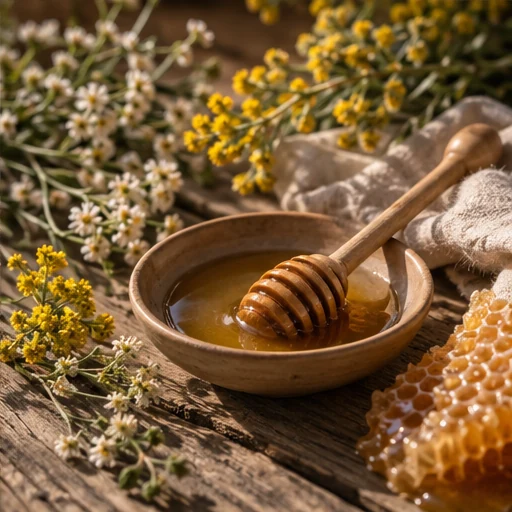
Honey may become cloudy, grainy or firm as natural glucose forms crystals. The timing depends on floral source, temperature and the character of the harvest. The USDA's extracted-honey standard recognizes crystallization as a normal condition in which crystals have formed.
If you prefer a flowing texture, keep the container closed and place it in warm—not boiling—water. Let it warm gradually and stir only with a clean, dry utensil. Or enjoy the crystallized honey as a spread on toast and biscuits.
04 · CLEAN HANDLING
Keep water and food out of the jar.
Use a clean, completely dry spoon. Avoid dipping in utensils carrying water, crumbs, butter or other foods. Honey naturally contains relatively little moisture; introducing water or food debris changes the jar and can create conditions the original product did not have.
Close the lid promptly after serving. If honey collects around the rim, wipe the outside with a clean cloth without pushing moisture beneath the lid.
05 · WHEN TO CHECK
Trust normal variation—but pay attention to unusual change.
Crystals, a lighter or darker shade, and a thicker texture can all be normal. If a jar develops an unfamiliar fermented odor, active bubbling unrelated to trapped air, visible mold, or signs that water or another food entered it, pause before eating it and ask the producer or seller for guidance.
Explore our four regional honey sources and current jar sizes, learn about our sourcing standards, or read the science and stewardship page. For current availability and Rhodes Ranch-area pickup, contact our family directly.
REFERENCE
Further reading.
For technical terminology about extracted honey and crystallization, see the USDA Agricultural Marketing Service honey standards.
“O taste and see that the LORD is good: blessed is the man that trusteth in him.”Psalm 34:8 · KJV