JAR CARE · OCTOBER 16, 2026
How do you clean
and reuse a
honey jar?
Use the last spoonful, soften the sticky film, dry every corner, and give a sturdy glass jar a thoughtful second life.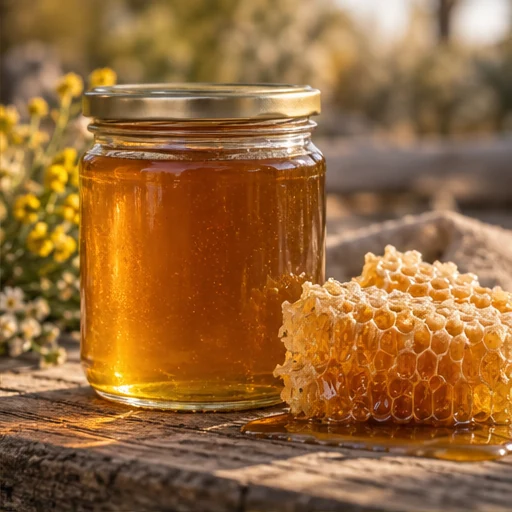
A glass honey jar is useful long after the final spoonful, but it deserves a proper reset first. Honey dissolves readily in warm water, so cleaning does not require aggressive chemicals or endless scraping. The important steps are to keep water out of the honey while you are still using it, wash the empty jar thoroughly, inspect the lid, and let every part dry completely before storage or reuse.
01 · WASTE LESS
Let the last honey join the meal.
Before washing the jar, use a clean spatula to collect what remains. If only a thin coating is left, add a small amount of warm—not boiling—water, close the lid, and swirl gently. The lightly sweetened water can go into tea, oatmeal, a vinaigrette, or a sauce that will be used immediately.
Do not pour drinking water into a jar you plan to return to the cupboard as honey. Added moisture changes the product and can encourage fermentation. This rinse-and-use idea is for a jar that is truly finished and headed directly to washing.
02 · DISSOLVE, THEN WASH
Warm water handles the sticky work.
Fill the empty jar with warm water and let it stand for several minutes. Swirl, pour out the dissolved honey, then wash the jar with dish soap and a clean brush or sponge. Pay attention to the threads around the rim, where a narrow ring of honey often hides.
Wash the lid separately. Metal lids can trap moisture around seams, liners, or worn coatings, while plastic lids may hold residue in their threads. If a lid is rusty, cracked, warped, or retains an odor after washing, recycle or discard it according to local guidance rather than trusting it for food storage.
03 · SAVE THE STORY OR CLEAR THE GLASS
Decide whether the label should stay.
If you want to remember the honey's region and flavor, photograph the label before soaking it. A warm-water soak may loosen many paper labels. For stubborn adhesive on the outside of the jar, use a small amount of cooking oil, let it sit, and rub gently before washing the exterior again with dish soap.
Keep label-removal products away from the inside and rim of any container that may hold food. Never mix cleaning products, and follow the product label if you use a commercial adhesive remover.
04 · MOISTURE IS THE FINAL TEST
Let the jar and lid dry separately.
Rinse away every trace of soap, then place the jar upside down on a clean rack where air can circulate. Dry the lid separately and do not close the jar until both pieces are completely dry. Las Vegas air may feel dry, but drops can remain beneath a lid liner or inside the jar's shoulder.
Before reuse, hold the jar to the light. Look for chips around the rim, hairline cracks, cloudy residue, or lingering odor. A damaged jar can still be useful for non-food items if it is not sharp, but it should not return to kitchen service.
05 · GIVE IT A CLEAR PURPOSE
Match the jar to a low-risk second life.
A clean, sound jar can organize buttons, craft supplies, wrapped tea bags, or dry pantry items. It can also become a small vase or a container for a homemade gift. Label the new contents clearly so no one mistakes the jar for its original honey.
Reusing a retail jar is not the same as preparing a canning jar. Do not use an ordinary honey jar for shelf-stable home canning unless both the jar and lid system are specifically designed for that process and you are following a current tested recipe.
If you are ready for another regional flavor, compare the four-honey collection, review our sourcing standards, learn more about bees and humane stewardship, or visit the Honey Guide. Our gift sets are assembled locally, and you can arrange pickup near Rhodes Ranch. For care while the jar is still full, read how to store honey in Las Vegas.
#DesertHoneyLV · #LasVegasHoney · #JarCare · #ReuseGlass · #SouthwestLasVegas · #RhodesRanch · #NevadaSmallBusiness
“Let all things be done decently and in order.”1 Corinthians 14:40 · KJV