JAR CARE · OCTOBER 19, 2026
Why does honey
foam or bubble?
A few still air bubbles can be ordinary. New, active bubbling with pressure or an unusual odor deserves a closer look.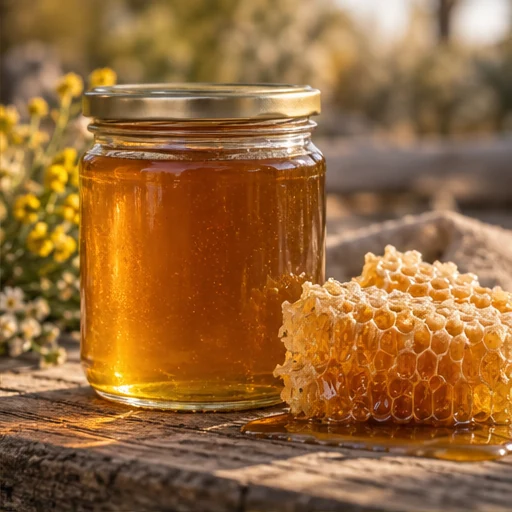
Not every bubble means the same thing. Honey can hold tiny pockets of air after extraction, straining, pouring, or bottling. Those bubbles may rise slowly and collect as a light surface foam before settling. That is different from a jar that develops continuing activity, pressure, leakage, or a distinctly sour or alcoholic smell. The most useful question is not “Is there one bubble?” but “Is the jar actively changing?”
01 · AIR CAN ENTER DURING HANDLING
Still bubbles and fresh surface foam may be ordinary.
Viscous honey can trap air when it is extracted, stirred, strained, poured, or transferred between containers. Because honey moves slowly, small bubbles can remain visible for a while. Fine pieces of wax can also rise with that air during settling and form a light layer at the top.
A few stationary bubbles, a thin foam line soon after bottling, or temporary cloudiness is not enough by itself to diagnose spoilage. Color, clarity, crystals, and trapped air all vary with floral source, temperature, time, and handling. Our unfiltered-honey guide explains why appearance alone cannot prove quality.
02 · WATCH FOR ACTIVE CHANGE
Persistent bubbling with odor or pressure is different.
Honey is naturally low in available moisture, which helps make plain honey remarkably stable. If enough water is introduced—or a high-moisture honey is stored under unfavorable conditions—yeasts can become active and fermentation can begin. Possible warning signs include repeated bubbling after the jar has been resting, expanding foam, a sour or alcoholic odor, leakage, a bulging lid, or pressure released when the container is opened.
Crystallization is not fermentation. A crystallized jar may become pale, cloudy, grainy, or firm without being spoiled. However, crystallization can concentrate moisture in the remaining liquid portion, so an actively changing jar should be judged by the full set of signs rather than by texture alone.
03 · CHECK WITHOUT GUESSING
Pause, observe, and do not taste a questionable jar as a test.
Set the closed jar upright on a clean surface and look for continued activity, leakage, or a distorted lid. If it was just transported or poured, allow it to rest and see whether the bubbles simply rise and disappear. If there is ongoing pressure, repeated foam growth, or an unusual sour or alcoholic smell, stop using it and contact the seller or discard it.
Do not rely on a taste test to decide whether a changing jar is safe. Also separate plain honey from products intentionally fermented under controlled conditions; mead and other fermented preparations follow different processes and should not be improvised from a questionable retail jar.
04 · THE DRY-SPOON RULE
Keep the lid tight and keep water out.
Store honey in a closed container in a cool, dry cupboard away from direct sun, steam, and large temperature swings. Even in dry Las Vegas, a wet spoon, condensation, crumbs, or repeated exposure near a sink can introduce moisture and other food into the jar. Use a clean, completely dry utensil and close the lid promptly.
Refrigeration is usually unnecessary for plain honey and can speed crystallization. If crystals appear, they are normally a texture change. Follow our gentle warm-water method, and read the Las Vegas honey storage guide for a simple cupboard routine.
05 · TRACEABILITY HELPS
A real seller should welcome a clear jar-care question.
If you are uncertain, photograph the unopened jar, note when it was purchased and how it was stored, and ask the seller what you are seeing. Useful details are more helpful than broad claims: whether the jar was recently bottled, whether it was transported in heat, and whether the bubbles are settling or increasing.
Desert Honey LV is a Las Vegas distributor of regionally sourced honey from independent beekeepers; we do not claim that the honey is produced in Las Vegas. Explore our regional honey collection, sourcing standards, bee-stewardship science, Honey Guide, and gift collections, or ask about a jar and local pickup near Rhodes Ranch.
#DesertHoneyLV · #LasVegasHoney · #HoneyStorage · #JarCare · #RegionalHoney · #SouthwestLasVegas · #HoneyEducation
“Whether therefore ye eat, or drink, or whatsoever ye do, do all to the glory of God.”1 Corinthians 10:31 · KJV
SOURCES CONSULTED
This guide was checked against USDA honey inspection and grading materials and Utah State University Extension storage guidance. It is general food-handling information, not a laboratory assessment of a particular jar.