JAR CARE · NOVEMBER 12, 2026
Should you
freeze honey?
Usually, no.
Plain honey does not need the freezer. A sealed jar, a dry spoon, and a stable cupboard are simpler—and usually better for texture.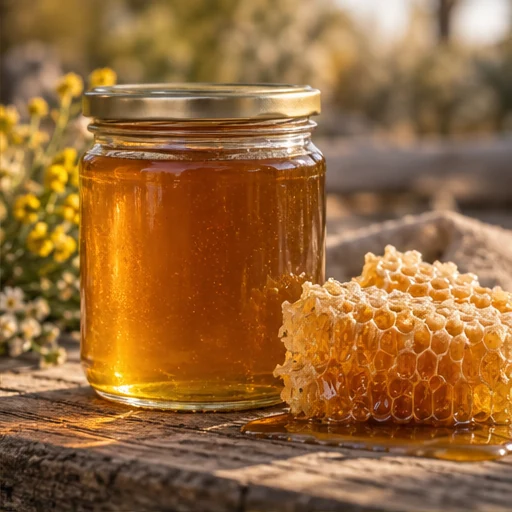
Freezing is useful for many foods, so it is reasonable to wonder whether a jar of honey belongs in the freezer too. For plain honey, the answer is usually no. Freezing is not needed for ordinary storage, and repeated cold-to-warm changes can make the texture less convenient without adding a practical benefit.
01 · THE QUICK ANSWER
Keep plain honey sealed at a stable room temperature.
Honey is easiest to use when the lid is closed tightly and the jar rests in a dry cupboard away from direct sunlight, steam, and strong heat. The National Honey Board reference guide recommends sealed room-temperature storage, while Utah State University Extension notes that honey does not need refrigeration or freezing to maintain its quality or extend its shelf life.
That guidance fits the way most households actually use honey. A cupboard jar is ready for toast, tea, oatmeal, cooking, and gifts. A frozen jar must be thawed, watched for condensation, and possibly softened before it pours again.
“No freezer needed” does not mean “store anywhere.” Las Vegas heat can be harsh. A parked vehicle, sunny counter, garage shelf, or cabinet above an oven may expose honey to prolonged heat that can darken it and flatten delicate aroma. Stable indoor storage matters more than making the jar extra cold.
02 · WHAT COLD CHANGES
Cold is more likely to change texture than improve storage.
Honey is a concentrated mixture of natural sugars and water. Its exact balance varies by floral source and harvest, so two honest jars may respond differently to the same temperature. One may stay fluid longer while another becomes cloudy or forms crystals quickly.
Cool conditions can encourage crystallization. That is a normal physical change—not proof that the honey is fake and not an automatic sign of spoilage. The jar may become thick, grainy, creamy, or nearly solid as crystals develop. Our gentle crystallization guide explains why it happens and how to restore a more fluid texture without rushing.
Freezing does not make every jar behave the same way. After thawing, the honey may pour normally, remain partly crystallized, or develop a different crystal pattern. Those texture differences are one reason freezing plain table honey is usually more trouble than it is worth.
03 · CONTAINER SAFETY
Do not put a completely full glass jar into the freezer.
Liquids and the small amount of water within foods can expand or shift as they freeze. A rigid container with no headspace has less room to absorb that movement. Glass can crack, lids can distort, and seals can fail. A cracked jar creates a food-safety and cleanup problem that is far more serious than ordinary crystallization.
If you have a special recipe or another reason to freeze a honey-containing food, follow that tested recipe and use a freezer-safe container with appropriate headspace. Plain honey should remain in its clean, food-safe jar with the lid closed. Do not repeatedly transfer it between containers unless necessary; every transfer creates another opportunity to introduce water, crumbs, or other food.
If a jar freezes accidentally, inspect it before opening. Look for cracks, chips, leakage, a lifted lid, or a broken seal. Do not use honey from damaged glass or a container that may contain fragments. When in doubt, set the jar aside and contact the seller rather than tasting it as a test.
04 · HOW TO THAW
Bring an accidentally frozen jar back slowly and keep moisture outside.
Leave the container closed and place it upright in a bowl or tray at room temperature. The bowl catches any leak and makes condensation easier to manage. Let the jar warm gradually; avoid direct flame, a hot burner, or boiling water. Wipe the outside dry before opening so droplets do not run beneath the lid.
Once the honey is fully thawed, check the container again. If the jar and seal are sound but crystals remain, place the closed jar in a warm-water bath with the water level below the lid. Replace the water as it cools and work patiently. Gentle warming is easier to control than intense heat.
Never pour water into the honey to make it thinner. Added moisture changes the product and can create conditions very different from those in properly stored plain honey. Use a clean, completely dry utensil and close the lid promptly after serving.
05 · LAS VEGAS STORAGE
A shaded indoor cupboard beats both the freezer and the desert heat.
Choose a cabinet away from a sunny window, dishwasher steam, the stove, and the top of the refrigerator. Keep the jar upright and make sure the rim is clean before tightening the lid. If your kitchen has a consistently hot zone, move the honey to a cooler interior cabinet rather than refrigerating it.
After local pickup, make honey one of the last errands of the trip and take it indoors promptly. Our guide to transporting honey in Las Vegas heat covers cars, insulated bags, and practical timing, while our complete Las Vegas honey storage guide explains light, moisture, utensils, and cupboard placement.
Natural color and texture can still change over time. That variation is part of regional honey. Judge a jar by its origin, handling, aroma, and condition—not by whether it remains perfectly clear and liquid forever.
06 · CHOOSE A PRACTICAL JAR
Buy the amount you will enjoy, then store it simply.
If you use honey occasionally, a one-pound jar is easy to keep at the table and finish without long storage. A three-pound jar can make sense for families, frequent tea drinkers, cooks, or holiday baking. Our one-pound versus three-pound guide can help you decide without relying on freezer space.
Desert Honey LV is a Las Vegas family distributor of regionally sourced honey, not a claim that the honey is produced inside Las Vegas. You can compare the current regional honey collection, review our sourcing standards, explore bee stewardship and honey science, or use the Honey Guide to choose by flavor and table use.
For a gift, see our honey gift options. For a household jar, contact the Desert Honey LV family to confirm availability and arrange a public pickup near Rhodes Ranch. The exact meeting point is shared privately after confirmation.
#DesertHoneyLV · #LasVegasHoney · #HoneyStorage · #JarCare · #RegionalHoney · #RhodesRanch · #SouthwestLasVegas