SOURCING STANDARDS · NOVEMBER 4, 2026
Local seller.
Regional harvest.
Know the difference.
“Local” can describe where you buy a jar. The harvest region tells you where the bees foraged and where the honey began.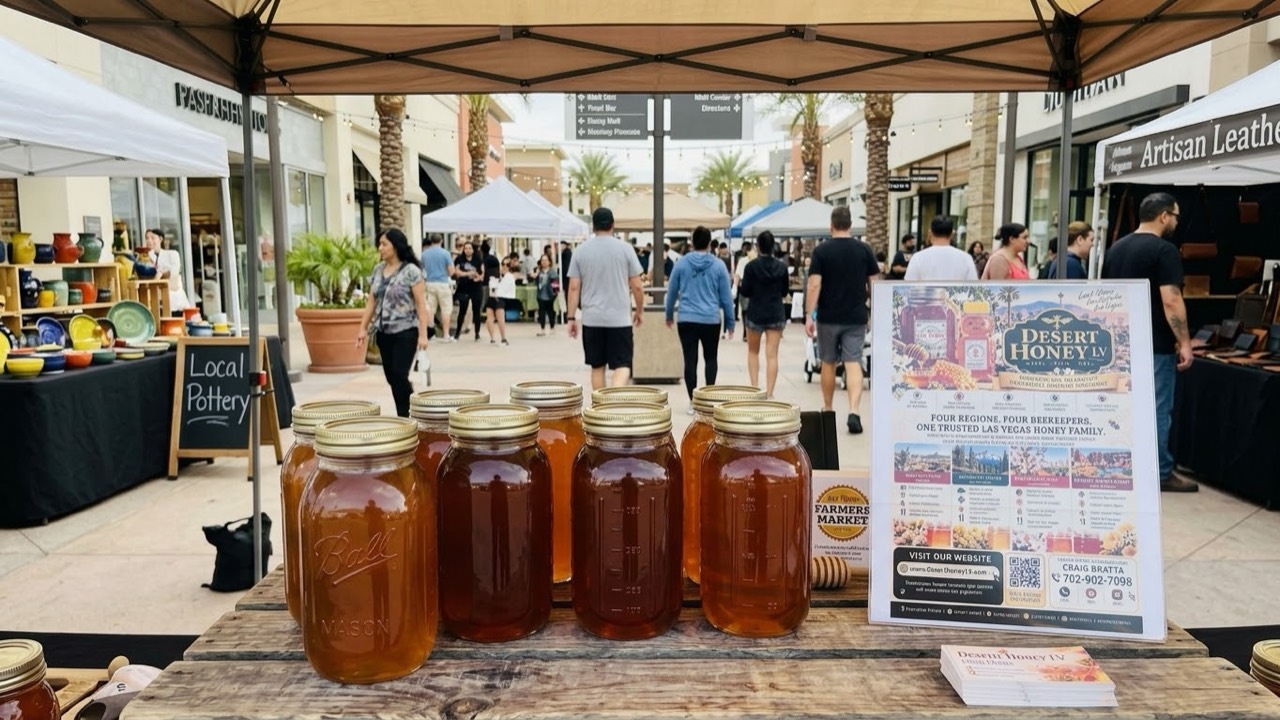
A jar can be sold by a Las Vegas business without being harvested inside Las Vegas. That is not a problem when the seller says so clearly. The useful question is not simply, “Is this local?” It is, “Where was this honey harvested, who is selling it, and can they explain the connection between the two?”
01 · THE QUICK ANSWER
Seller location and harvest origin are two different facts.
Honey sold locally describes the transaction: a customer buys from a nearby business, market booth, pickup point, or shop. Honey harvested locally describes the agricultural origin: the colonies gathered nectar and the beekeeper collected the honey within the stated local area.
Those facts may match, but they do not have to. A Las Vegas family can distribute honey from independent beekeepers working in distinct regional landscapes. The honest approach is to name the harvest region instead of letting the customer assume every jar was produced within city limits.
Desert Honey LV uses “local” for our Las Vegas family business, customer service, markets, and arranged pickup. We describe the honey itself by its regional source and do not represent regionally sourced jars as produced in Las Vegas.
02 · THREE PLACES TO KNOW
Ask where it was sold, harvested, and foraged.
The seller location tells you who handles the customer relationship. That may determine whether you can meet the business at a Las Vegas market, arrange pickup near Rhodes Ranch, ask questions directly, or receive help choosing a jar.
The harvest region tells you where the beekeeper collected the honey from the colony. It should be described specifically enough to mean something, such as a named valley, mountain region, orchard area, or border landscape rather than a vague phrase that sounds nearby.
The forage landscape describes the flowers available to the bees. Colonies range beyond a single plant, and bloom conditions change with rainfall, elevation, temperature, wind, and season. A regional name is therefore a useful origin clue, not a promise that every jar will taste identical forever.
03 · WHY REGION MATTERS
Origin helps explain flavor without turning it into a quality score.
Regional origin gives context to color, aroma, texture, and flavor. Orchard bloom may produce a different impression from high-country wildflowers or desert forage. The difference is agricultural variation, much like fruit from two growing regions can share a name while tasting distinct.
A darker jar is not automatically more local, raw, nutritious, or authentic than a lighter one. Color is shaped largely by nectar sources and seasonal conditions. Use it as a tasting clue, then read the origin and handling information. Our guide to why honey color varies explains what appearance can and cannot tell you.
Regional sourcing can also let a small Las Vegas seller offer meaningful variety. Customers can compare landscapes rather than choosing from jars that differ only in packaging. The value comes from clear origin and honest handling—not from stretching the word “local” until it loses its meaning.
04 · QUESTIONS TO ASK
A trustworthy answer should be simple enough to repeat.
Before buying, ask: Where was this honey harvested? Is the stated place the beekeeper's harvest region or only the seller's address? Was anything added? How was the honey strained or warmed? Can the seller explain why the current jar may differ from a previous season?
Look for answers that separate facts from tasting language. “Harvested in a named region” is an origin statement. “Floral,” “bold,” or “buttery” is a sensory impression. Both can help, but one should not be used to disguise the absence of the other.
Be cautious when a label relies on broad wellness promises, unsupported certifications, or a city name without explaining where the bees foraged. A transparent seller should welcome ordinary questions. See our step-by-step guide to reading a honey label and our sourcing and credibility standards.
05 · OUR SOURCING MODEL
Desert Honey LV connects Las Vegas customers with regional independent beekeepers.
We are a family-run Las Vegas distributor, not a claim that every jar was produced inside the city. Our role is to select regionally sourced honey, explain the harvest landscape as accurately as we can, help customers compare flavors and sizes, and make pickup or secure checkout practical.
Our collection includes distinct regional styles rather than one anonymous blend. Availability can change because honey is a seasonal agricultural food. When a harvest differs in shade, aroma, or texture, we treat that variation as something to explain—not something to hide.
You can compare the current regional honey collection, read our bee stewardship notes, or use the Honey Guide to choose by flavor and table use. We do not invent beekeeper certifications, promise an exact floral recipe, or call a regional harvest “Las Vegas-produced.”
06 · BUYING LOCALLY IN LAS VEGAS
Local service can still be genuinely valuable when origin is regional.
Buying from a nearby family business gives you a direct person to ask about jar size, flavor, storage, crystallization, gifts, and pickup timing. It also keeps the customer relationship in the Las Vegas community even when the agricultural source is a broader regional landscape.
Desert Honey LV arranges pickup near Rhodes Ranch in Southwest Las Vegas. The exact public meeting point is shared privately after the order is confirmed; a home street address is not published. Our local pickup guide explains the process, and our Las Vegas honey-buying guide helps you compare jars without relying on slogans.
Ready to choose? Browse one-pound and three-pound regional jars, explore gift and discovery options, or contact the Desert Honey LV family. We will tell you what we know, label origin honestly, and help you choose a flavor that fits your table.
#DesertHoneyLV · #LasVegasHoney · #RegionalHoney · #HoneySourcing · #RhodesRanch · #SouthwestLasVegas · #NevadaSmallBusiness